Thursday, 20 September -- London

Our day started with a bit of a taxi adventure -- we ordered one to take us to a hotel near the Eurostar station at St. Pancras, confirming that they'd take a credit card, since we were running low on pounds. When the car came, the driver didn't have the address we'd already provided, and at the end of the convoluted journey through London (75 minutes to go about 6 miles), no way to accept a credit card. We didn't have enough cash to cover the fare, but he took all we had and called it a day. The option was to wait while we went to a cash point. It was all a little weird. As we expected, our room wasn't ready, but we left our luggage and scoped out our route for tomorrow morning, to the Eurostar boarding area.

 
We took the tube to Blackfriars and walked across the bridge to the Globe Theatre, where we had a most interesting tour, including watching part of a rehearsal for the final jig bit of Othello. (I know Othello doesn't end with a jig, but apparently it's a tradition here. In this case it's a very low-key, sort of depressing jig). The display area is most interesting as well, and we lingered there for quite awhile.


Then we hopped on one of the river boats and rode to Westminster, walked past the Houses of Parliament,


 and Big Ben/Elizabeth Tower all shrouded in scaffolds for the next 3 years. Sigh. 
Got to Westminster Abbey not long before last entry. There is so much to see there that we spent the rest of our time and energy on it, deciding to forego the London Eye for this visit. 
On our way back to the subway, we witnessed some kind of event -- was it a demonstration? -- what seemed like a couple hundred motorcycles pouring down the street, blowing horns. Very noisy, but orderly, and we have no idea what it was about.
Back to St. Pancras where we had a nice dinner right in the station -- the whole place was re-done a few years ago and is quite magnificent. Then just down the street to the Alhambra Hotel. Our room turns out to be in a different building, across the street and down a steep flight of stairs from street level. It's very compact, but fine for one night. Clean and with a comfortable bed. A window opens to an inside air shaft/courtyard, and subway trains rumble by beneath us somewhere.

Friday, 21 September -- London to Paris

In the morning we crossed the street for a very nice breakfast. The people running the Alhambra are terrific. We had plenty of time to organize ourselves and walk over to St. Pancras Station. There were the usual line-ups for check-in, passport control, security, but it was all smooth. We did have to heave our large suitcases onto a high shelf, but Larry managed that and soon we were very comfortably seated. The last time I did this trip was 1990, with Nicole. It was a kind of nightmare, took much longer and involved a train, a hovercraft, a holding pen, an extremely crowded bus, a trek across an open field, an extremely crowded train and a climb up onto the station platform in Paris, all while carrying non-wheeled luggage. We saw little scenery and had little comfort. It gave us a very tiny glimpse of what it must feel like to be a refugee. This Eurostar is fast, comfortable and we could see quite a bit of the countryside.  The Chunnel was a quick 20 minutes of darkness. There was a 25-minute line-up for taxis at the Gare du Nord, but it was well-handled and efficient. Our trip through the city to the Hotel Pas de Calais was smooth and we got to see a few things like the pyramid at the Louvre.  The hotel is bright, comfortable and nicely decorated, with friendly staff.
We went for a walk around the area, then met up with
the rest of our group at the hotel. How great it is to be travelling again with Cathy, Gabriela, Maria-Angelica, Sally-Jo, Mary-Ellen, Brock, Elsie, Ellen-Mary, Walt, Barb, Dave and Carol. We all went for a nice dinner a few blocks away, but when the bill came it fell apart -- we'd arranged for separate bills but didn't get them, meaning we had to figure out our shares and also had to pay cash. Some people were very tired after travelling most of the night before, so we didn't need this complication. It was nearly 11 when we got back to the hotel.

 Photos of the Day

Next Day Paris 


Saturday, 22 September -- Paris

We only had this one day here, so decided to just hit a few high points. We went to a local cafe for breakfast, which was expensive, but felt very Parisian. We walked along the Left Bank, past bouquinists, to the Musee D'Orsay.

There was a long, but quickly-moving line and we greatly enjoyed the museum for a few hours. It's good prep for the places we'll see on our cruise that are associated with the Impressionists. We had lunch at a sidewalk cafe outside the museum, watching the street life. At the metro station there, we bought one-day passes,


then took the Metro to Notre Dame. We decided to admire it from the outside, since the lines and crowds looked intimidating. We had been in before, so will hold on to those memories.


Next stop was the George V station on the Champs Elysees. That's where we used to get on and off for our hotel when we were here 35 years ago.


Luckily, we had decided on that destination beforehand, because, in the crowd, I couldn't get on the train Larry had boarded. I caught the next one and  we met up at George V and walked about a bit in the rain. We didn't go in search of our old hotel.


 Next stop was the Louvre, where we explored The Carousel (new since we were here last) and sat in the courtyard for awhile. Back at St. Germain de Pres, we stopped at the church and bought tickets for a concert tonight. Then put our feet up in our room for a bit. We had no English exchanges with locals today, and got or found out everything we wanted -- good to  know the French still works.
The concert tonight was great. For starters, it was in a church built in the 11th and 12th centuries, currently undergoing massive restoration -- what we could see was magnificent. And the 5 musicians were very good. Eight of us were there to enjoy it. Now to pack up, ready to leave tomorrow morning.

 Photos of the Day 

Next Day: Paris to Ypres


Sunday, 23 September -- Paris to Ypres and Vimy Ridge

We drove north through alternating rain and clearing and eventually came to
Beaumont Hamel, the Newfoundland memorial park. It has not been touched since World War I, though 100 years has softened the outlines of the trenches and craters. It was raining, so we walked the site, but then hurried indoors. In the chapel of the interpretation centre


we heard some of the poems from the poets of that war, read by members of our group. We picked up lunch from a place familiar to our guide, Samantha, that is also a mini-museum of artifacts discovered on the property. Many things, and bodies, continue to surface all over this area. At the Thiepval Memorial it was raining too hard to do more than visit the interpretation centre. Near the road we saw the giant crater from a massive underground explosion, but again rain kept us on the bus.
At the Vimy Interpretive Centre we walked through communications tunnels to get an idea of how they felt, and were told that the Canadians who captured Vimy Ridge spent 36 hours down there before their attack. Almost impossible to imagine.


Our last stop of the day was the Canadian Memorial at Vimy Ridge -- the most important thing for me to see on this trip. It was still raining a bit and very windy, but we had the place pretty much to ourselves, and wonder of wonders! -- as we
walked up the approach a perfect rainbow appeared over the monument!

Link for more pics of the Vimy Ridge Memorial


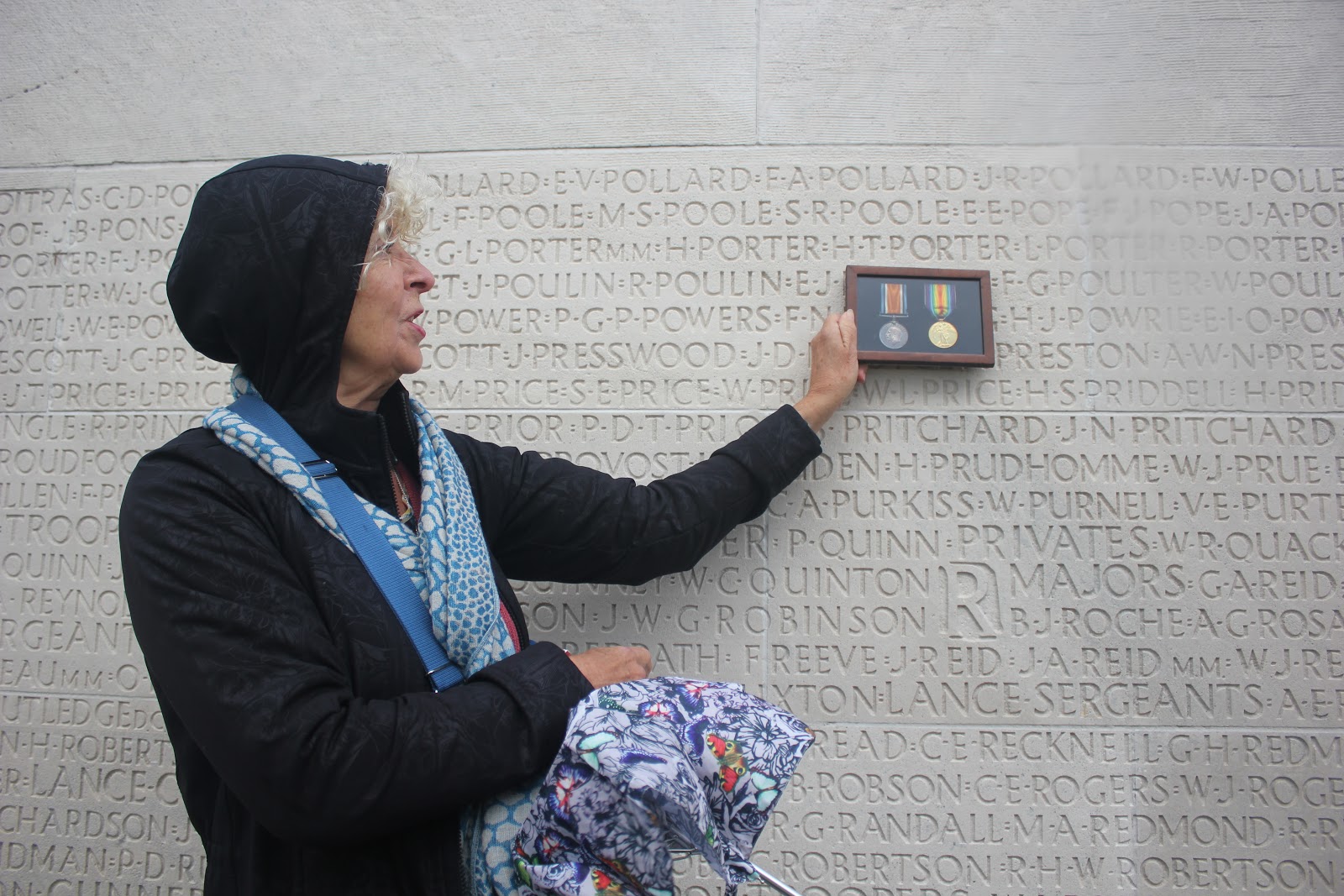
Carol had brought her great-uncle's medals. He was killed here, aged 17, and his body never found, so his name is one of the thousands (HT Porter, with the metals under his name) on the monument. We found it, and she got good photos. The trip from there to Ypres proved much longer than expected because of road work, but we got there eventually, checked into the very nice Albion Hotel and immediately went to dinner in a noisy, crowded restaurant with terrific food and very friendly locals. Then back to the hotel for a quick meeting to outline tomorrow's plans and off to bed.

Photos of the Day

Video of Carol and Menin Gate Ceremony

Next Day: Vimy Ridge - The Brooding Solder 

Monday, 24 September - - The Brooding Soldier, Tyne Cot, Essex Farm, Passchendaele Ridge, Hill 62

The city of Ypres is beautiful, having been re-built, brick by brick, as part of German reparations after the Great War. In fact, this whole area is lovely and peaceful, but always there is an underlying sorrow in that peace. Our first stop this morning was Essex Farm, where John McCrae wrote In Flanders Fields. Essex Farm was a casualty clearing station near the front, and it's clear that conditions were very difficult for both the patients and the medical personnel. A large open area is filled with poppies in the summer, though they're gone now. Wreaths and small crosses have been left everywhere in the cemetery by visitors.

We recited In Flanders Fields as a group. [standing in front of the memorial to McCrae]


The Brooding Soldier is an evocative Canadian memorial at St. Juliaan.


Our visit to a large German war cemetery showed a different side of the war. Many of those buried there were even younger than the boys in the Allied cemeteries -- 11 or 12 years old in some cases. The stones are dark, unlike the white ones in the Allied cemeteries.
Our lunch stop was at a pizza place run by Canadians from Sarnia Ontario (near my home town -- we shared memories).
We went on to the Canadian Gate and the Crest Farm Memorial, a place where Canadians lost a high point then spent 13 days regaining it, at extremely high cost.


The largest Commonwealth War Graves Commission Cemetery is the world is Tyne Cot and it is heartbreaking to see the rows and rows of graves. In the interpretation centre a soft, calm, dignified voice reads the names, ranks and ages of those buried there, while their pictures are projected on a screen. Many, many of the stones, though, are for unidentified men, "Known to God".
Link to Video of Tyne Cot


A monument at Hill 62 marks the Sanctuary Woods battle.
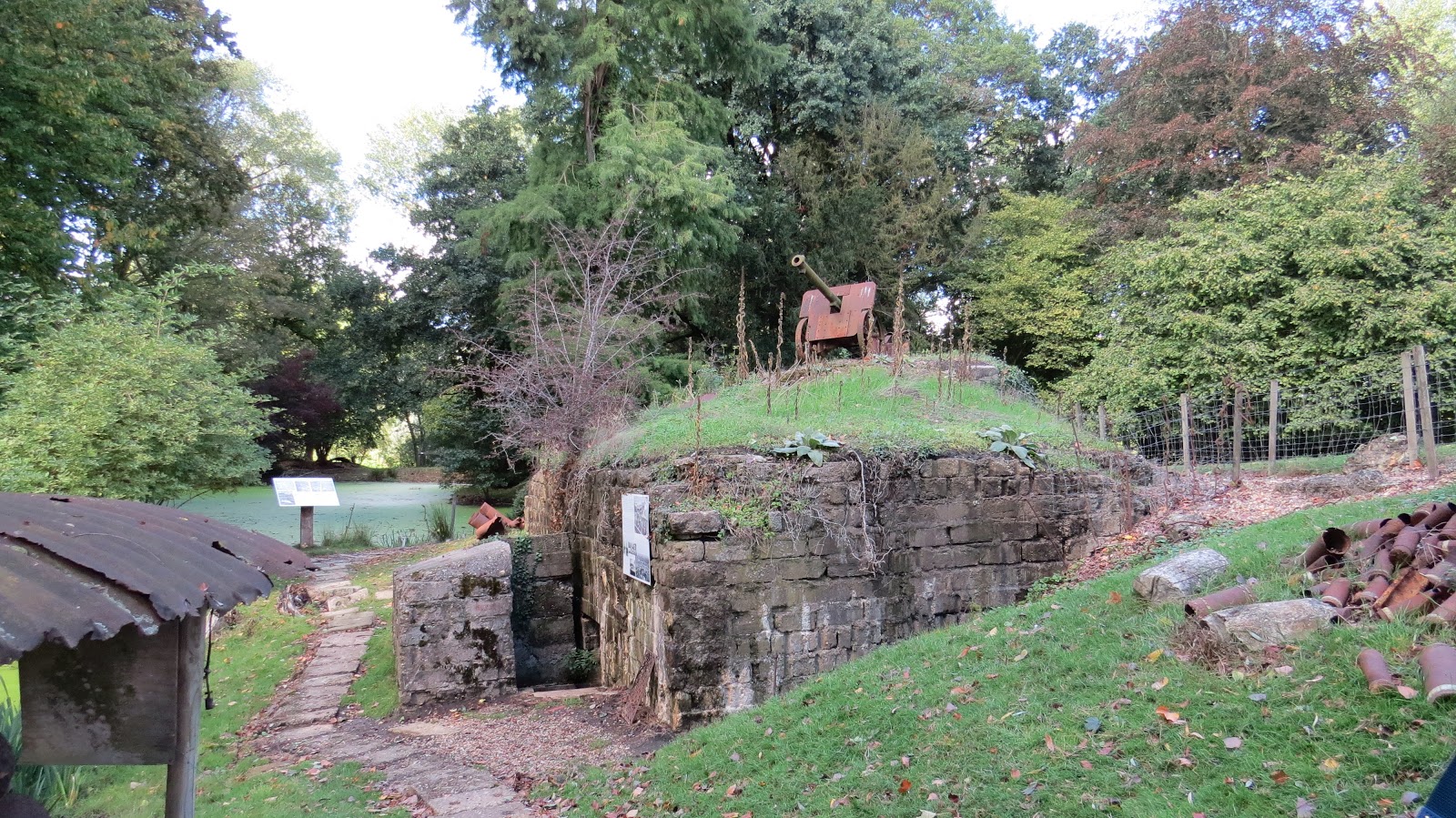
We were amazed by the artifacts we saw at an unchanged site. It's a private place that's been cleaned up but not altered, where you can see a huge crater, now water-filled, trenches and their roofing, barbed wire and the posts used to string it, shell casings and many other things just lying around, as they were 100 years ago.


Back in Ypres, we walked along the ramparts to the Menin Gate where we could see the names of the Canadian missing, along with thousands from other Allied Countries.

We walked to the Cloth Hall and then visited the cathedral.
After dinner, we walked to the Menin Gate for the Last Post Ceremony. Carol, accompanied by Brock and Walt, laid a wreath on behalf of all of us. [see video below]  We felt very honoured to be part of this moving event.

 Photos of the Day

Video of Carol and the Menin Gate Ceremony

Tuesday, 25 September -- Dunkerque, Dieppe, Bayeux

The drive from Ypres to Dunkerque (Dunkirk) was one and half hours, but we were moving through the 21 years between the first and second world wars, learning from Sam how one led to the other.
Dunkerque is now a peaceful seaside town with broad beaches, but in 1940 it was the site of the evacuation of 300,000 British and French troops, by the "Little Boats of Britain".
A little farther along the road, we passed the Chunnel entrance that we came through last Friday. It's very well-protected.
As we approached Dieppe, Sam explained the disastrous raid there in 1942, "Operation Jubilee".
Our first stop was at Puys, the Dieppe Raid's Blue Beach. Looking at it we could see the sheer impossibility of the raid, and wondered why it was even tried. The cost was a horrific: of 6100 troops (including 5000 Canadians) about 1200 dead (including 907 Canadians), 2340 prisoners and 119 planes and 1 destroyer lost. Later in downtown Dieppe, we met a local couple who maintain a museum in an old theatre, where we saw artifacts from the raid.


Larry found the name Harman Huffman on the list of Killed in Action, so now I'll be doing a bit of genealogical research to see what relationship might be there. Not too many Huffmans who aren't some relation of mine.
It was another long drive to Bayeux, where we'll stay for 2 nights.


Wednesday, 26 September -- Mont St Michel, Bayeux

Narrow twisting roads over rolling country out of Bayeux toward the coast, with farm wagons in evidence and tall thick hedges. Stone buildings and church spires. {In conversation this morning, we learned that The Last Post was first played at the Menin Gate in 1928 when the gate was dedicated. Now it is the traditional piece of music for our Remembrance Day ceremonies and military funerals -- much as "Taps" is in the US}.
Mont St Michel came into view standing alone on the skyline.
We stopped for a group photo on the roadside, with it in the background.


Carol has been determined to learn to take selfies, and this was where she managed to get the camera "turned around", then we watched as she tried to line up the shot, until she finally said "where the hell is the castle?". But she finally got the shot.


We parked quite a distance away, and walked to the info centre where we boarded a crowded shuttle to the far end of the bridge, near the entrance.
That leads into the "main street" where shops and restaurants line the area that begins the long upward trek to the abbey. Only four of us (Mary Ellen, Carol, Gabriela and I) followed Sam to the top. The rest apparently enjoyed a leisurely lunch (and a few beers) in one of the many restaurants. The views were spectacular and it's difficult to comprehend the skill and sheer amount of labour involved in building this amazing place. By the time we came down, it was very crowded and I was hot, hungry and thirsty, so stopped at an open-front shop to get a baguette sandwich and soft drink, which I carried back on the packed shuttle (way more crowded than the earlier one) and enjoyed on the bus. For sure, if you're going to Mont St. Michel, go as early in the morning as you can get there.
Back in Bayeux we went straight to
the Bayeux Tapestries exhibit, getting there just before last entry. We only had time to walk past the tapestries, but there was an excellent narration going with them -- they're truly amazing. I've been wanting to see them for a long time and wasn't disappointed. 70 metres of needlework, 1000 years old, detailing  William the Conqueror's conquest of Britain in 1066. [this is one of many many panels telling the story from start to finish]


Thursday, 27 September -- Bayeux to Paris to ??

After breakfast several of us did a circuit of the very nice botanical garden, just across the street from our hotel, before getting on the bus. We shared more poems and Cathy presented Sam with an Inuit sculpture and both Sam and Phillipe with cards and their tips, along with our great thanks. We sang "Go Now in Peace" for them.
Leaving Bayeux, we passed a war memorial with flags of several nations and shortly afterward a huge Commonwealth War Graves Commission cemetery. The reminders are everywhere here. Sam gave a summary of some of the personal stories she's heard from veterans over the years.
Soon we were on a superhighway, heading for Paris. We picnicked at a rest stop and continued on through rich  farmland. Arriving in Paris, we crossed the Seine with a fantastic view of
the Eiffel Tower and the Statue of Liberty. We pulled up to the dock only to discover that the Amalyra was not there. It had been unable to get to Paris because of a broken river lock. Phillipe kindly agreed to drive us to that new location and after some negotiations, AMA agreed to pay the cost. We had an even better view of the Tower, and then we were into the melee that is the traffic around the Arc de Triomphe, and then into snarled traffic leading out of the city. Is there any possible explanation for the fact that AMA didn't bother notifying us, when they knew at 11 pm Wednesday where the new mooring was? Seems like very poor management to me. Lots of construction along the way and so very slow going and a very different and less appealing view of the city. It took 90 minutes to get to the boat.
Our cabin is pretty snug, but we settled in quickly and found a place for everything. There was a bottle of champagne and some chocolate-covered nuts awaiting us, and a welcome reception in the Lounge. We were joined there by the 15th (and new) Intrepid, Pat, who had spent the day walking around Paris after her plane landed at 8 am. Gabriela had reserved The Chef's Table for all of us for dinner. That's the small restaurant, with a special menu. It was delicious and really nicely presented.

Friday, 28 September -- Conflans

We started moving around 1 am and by sunrise could see farmland and the occasional dock along the shore. After breakfast we admired the Captain's skill as we  pulled into a lock with only inches of clearance on each side. Most of the nearby buildings were stone. Soon we sank so that there was a concrete wall very close to our window, then sailed back out onto open river. This will happen several times.
At les Andelys we chose the gentle tour -- a bus ride to an overlook where we saw the town below, the serpentine Seine off in both directions, and the ruins of

Chateau Gaillard. Our guide explained the history of this fortification, built by Richard the Lionheart in the late 12th century. The town was where the workers lived who quarried the limestone and built the fortress. Both have been destroyed at various times, but the town bustles now.
Beside the ship we watched a fisherman, 2 swans and many ducks.
The afternoon was one of lovely leisure. We sat in the front of the lounge for lunch and lingered there, watching the sights along the river, including dramatic white cliffs, like at Dover. Then we retired to our cabin where we read and dozed until cocktails and dinner. The evening entertainment was 3 very talented local guys with violins and guitar playing classical and not-so-classical music.

Saturday, 29 September -- LeHavre, Honfleur, Le Pays D'Auge

We were docked at LeHavre and set out early to cross the Seine to Honfleur. It took awhile to sort everyone out, since people for different all-day tours seemed to have been randomly assigned to buses, so the guides had to go from bus to bus searching for the people on the wrong ones. We were disappointed to be moved from a bus with lots of open seats to one that was crammed full.


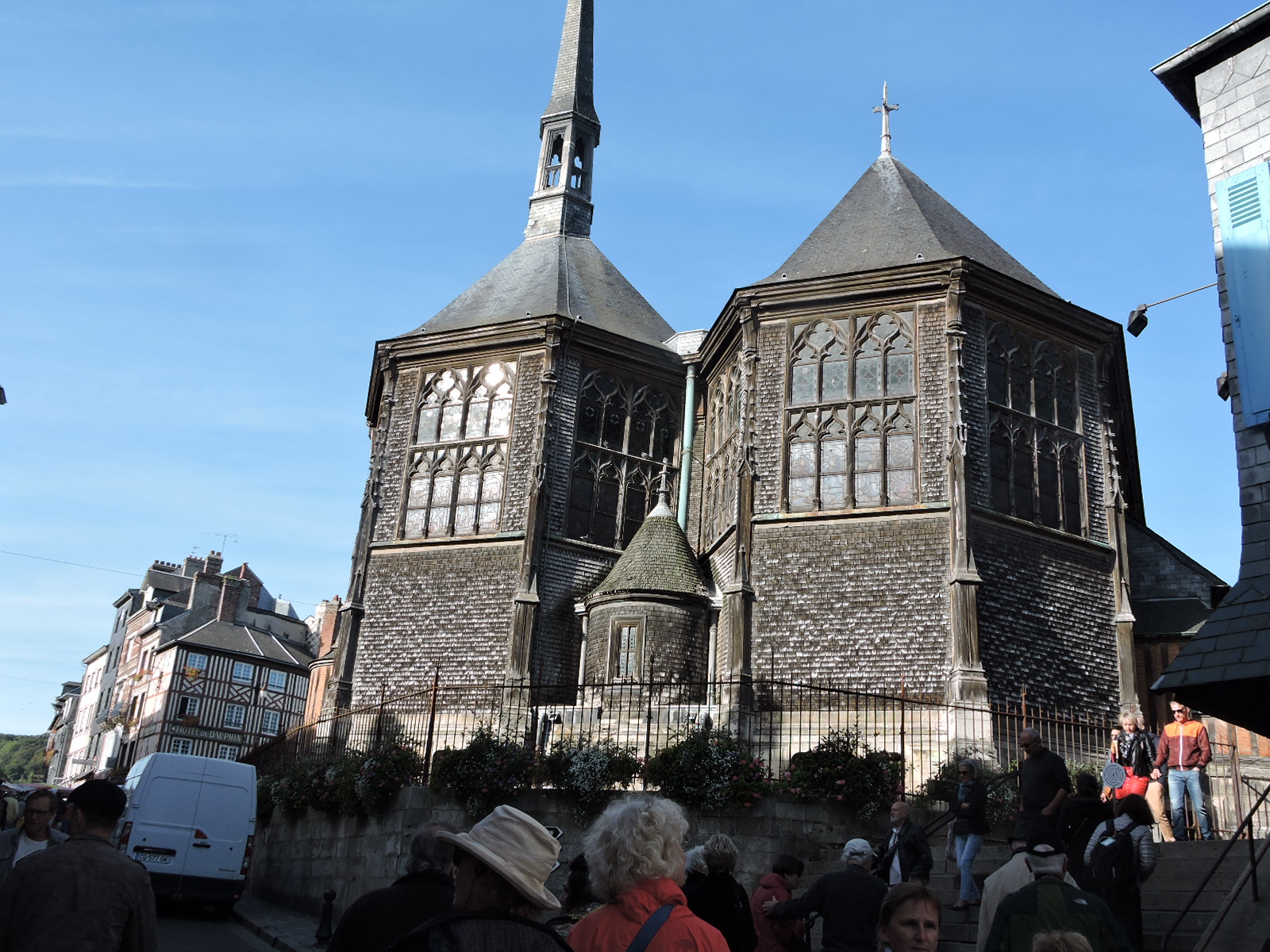
Honfleur is the town where many of the Impressionists learned their tricks at representing light. Our guide has a PhD in Art History, so was able to explain some of those to us as we gazed over the harbour. She also gave us a good rundown on the story of the church that was saved from destruction in the war(s) by prayer. It was market day and there was also a big autumn food showcase. The architecture is wonderful, covering many centuries. We saw a wall with bricks from several eras -- different sizes, colours, and shapes reflecting the methods of the time. We had fries and ice cream for lunch, then some chocolate samples to finish off a nourishing meal.

The afternoon part of the tour started in Beaumont En Auge, an old monastery town with with a lovely old church, half-timbered thatched houses, pretty streets and a very interesting art gallery.
The Christian Drouin Calvados distillery has a lovely setting among many kinds of apple trees that are in mid-harvest now. We were given an interesting description of the distilling process, but when it came to sampling, most of us preferred the apple juice to the Calvados.


The most fun bit was seeing the bottles on the trees with apples growing inside them and the bottles with grown apples waiting to be filled.
Back on the ship we had an informative lecture about WW2, in preparation for tomorrow's visits to the D-Day beaches.


This was preceded by a nasty lecture from Natalija, who is in charge of excursions, scolding us for not knowing what tour we were on this morning and getting on all the wrong buses. What an example of poor customer relations! My goodness. I know that I was very specific about our tour because I knew there were 2 that might be confused (they should have been identified as A and B or something, but weren't), and that her staff gave us the wrong bus assignment. I even double-checked with the person checking us onto the bus, who said this was the correct tour. This does not speak well for AMA Waterways. Surely if someone makes a mistake, she should just say sorry, and try to avoid the same thing next time, not blame it on her clients. Well, tomorrow's pretty clear anyway, Americans at 8 am on one tour, everyone else at 8:30 on the other. (Just read this and realized it sounds like we're being segregated by  national origin or something, but it's because the D-Day landing beaches were specific -- Americans in one sector, Canadians on one beach, British and other allies on other beaches surrounding the Canadian one.)

Sunday, 30 September -- The D-Day Beaches

We left LeHavre early, while there was still mist over the Seine and the rising sun shone in our eyes. This was our day at the Normandy landing beaches, 6 June 1944.
Our first stop was the Ranville
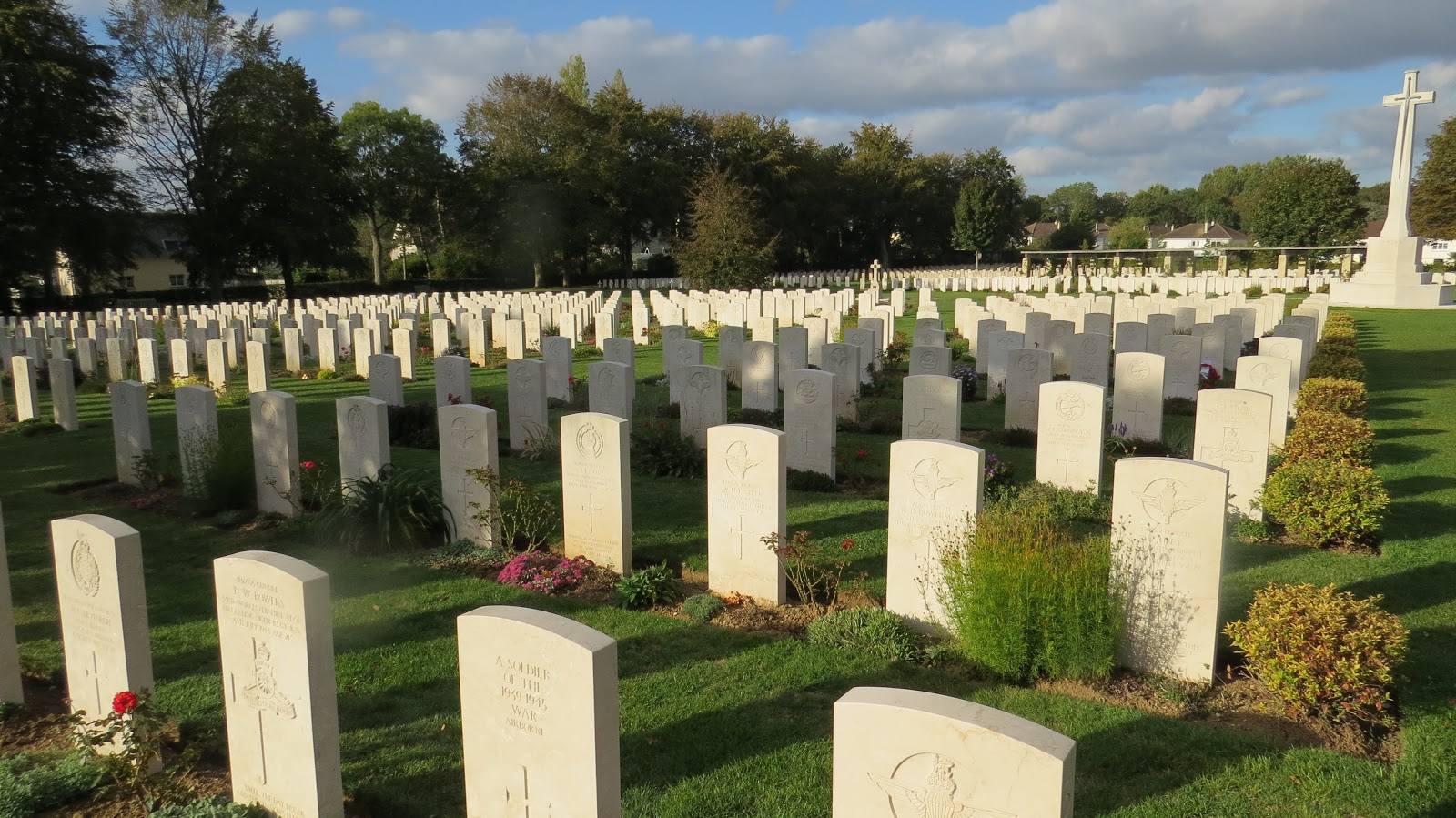
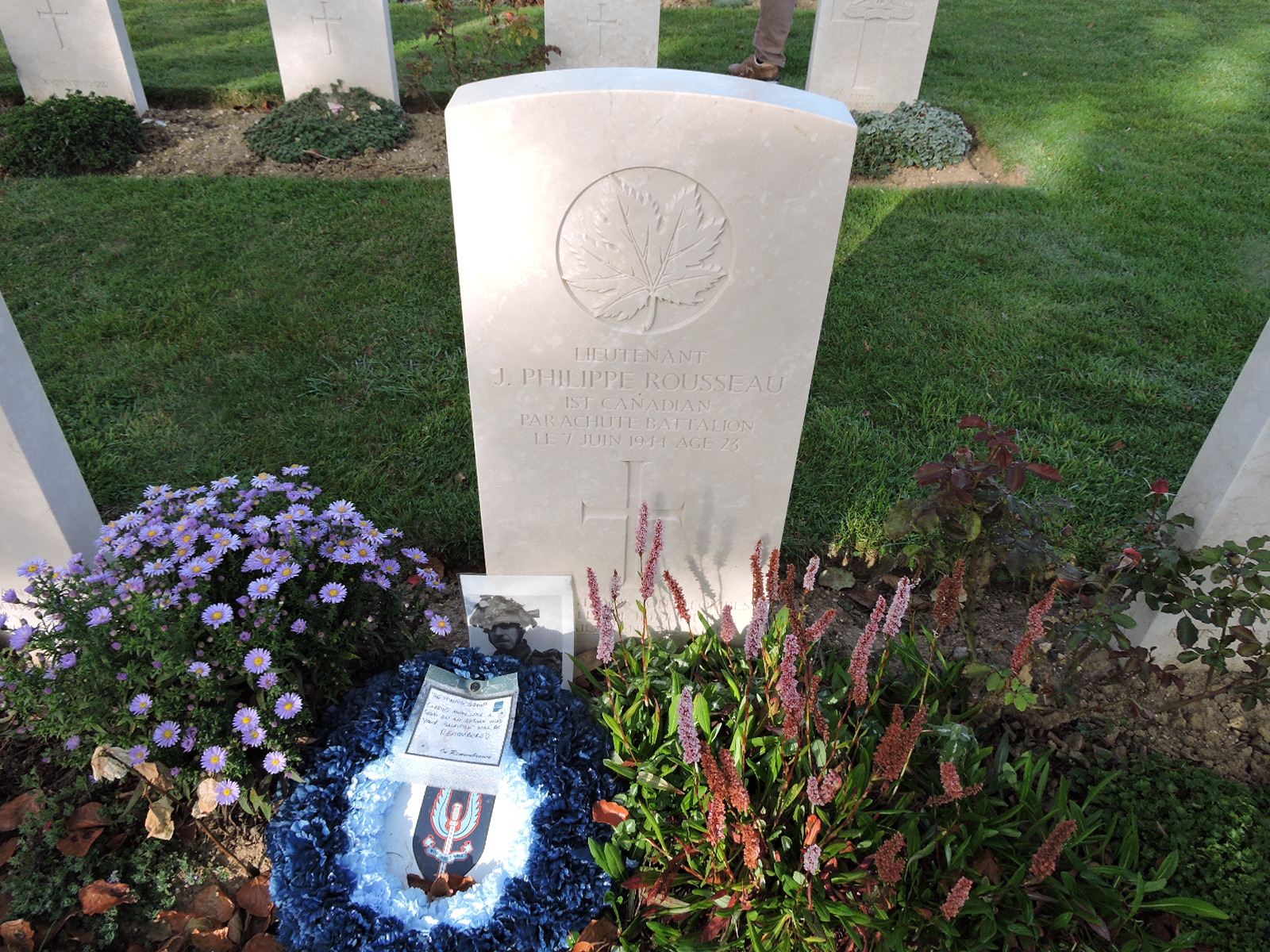
Commonwealth War Graves Cemetery.  Seeing yet another vast array of white headstones and reading the names and ages of these young men brings a lump to the throat, and reading the personal inscriptions, chosen by family, at the bottom of each brought tears.


Perhaps worst are the ones that don't have a personal inscription or are of unknown soldiers.


Pegasus Bridge -- what a fascinating, heroic story! Gliders landing in the night of 5/6 June before the beach landings, to capture a couple of bridges. I don't think I ever saw "The Longest Day", but for sure I'll watch it now. Apparently it's a pretty accurate depiction of what happened here, with the exception of the place the piper occupied crossing the bridge. He was not at the front, but farther back.


The cafe that is the first building liberated still stands by the bridge and is full of memorabilia.
Beny-sur-Mer is an entirely Canadian cemetery, from whch you can see the ocean at Juno Beach. I left a cross and poppy on one of the graves with no personal inscription.


Some members of the group were able to find graves they were looking for, for themselves or friends with a connection to someone who died at Juno.
This area of France is the breadbasket, noted for cattle, horses, and crops. We saw all of them--so peaceful and productive.


We picnicked at Arromanches, overlooking Gold Beach. You can still see the remains of the temporary harbour that was built here in 1944, far out from shore. Our guide told us that the beaches were supposed to be named for fish -- gold, sword, and jelly. But "jelly" didn't have the right ring, so they called it "Juno".  Of course, the American beaches, farther west, are Utah and Omaha, named for places in the US.


Our last stop was Juno Beach at Courseulies-sur-Mer, where the Canadians landed on D-Day. There is a great museum/interpretation centre with information about Canada as well as the war and D-Day. It ends with a film of remembrance that brought many of us to tears.


Then, to pile emotion on emotion, we found that Maria Angelica is one of a number of refugees who've found homes in Canada, featured in the last room of the museum. She and Gabriela had known that her story formed part of a temporary display a number of years ago, but not that it had a permanent place in this museum. We told the staff that one of the people was there, and they were very pleased to meet her and take her photo with the display.


It was a long ride back to the ship, that had moved to Caudebec-en-Caux. We were too tired to even think about walking around the town, though it is said to be very picturesque and interesting.
It was Sally-Jo's birthday, so we enjoyed cake with our dinner.